/ 3 min read
Tonka: The Bean That Invented Modern Perfumery
It is small, dark, and unremarkable — a wrinkled black seed you could mistake for a shrivelled almond. Yet the tonka bean carries a warmth that has quietly shaped everything you have ever smelled from a modern bottle: new-mown hay and bitter almond, vanilla and hot stone, a sweetness that never quite tips into sugar. If you want to understand where contemporary perfumery began, you do not start with a flower. You start with this bean.
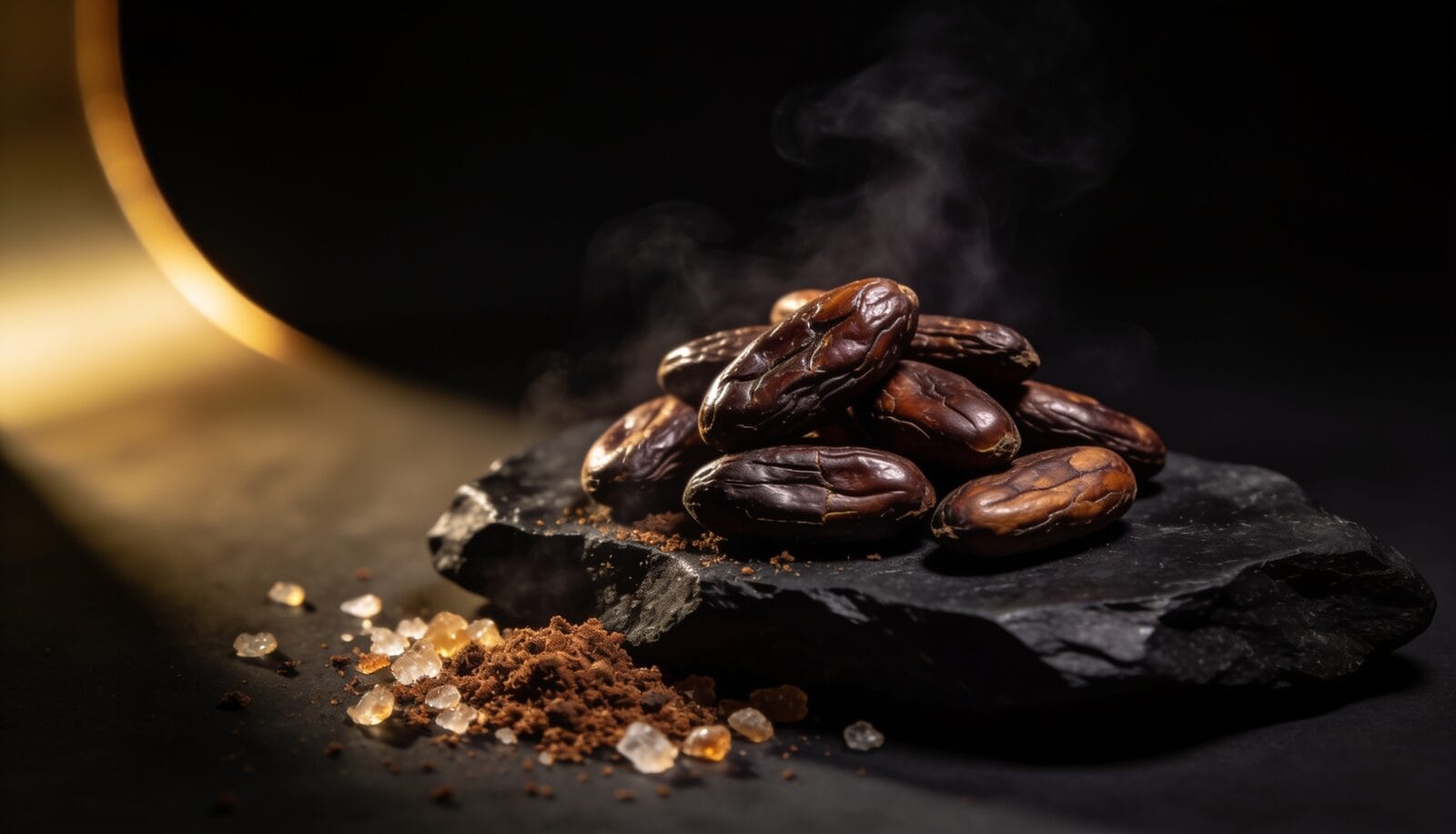
Tonka is the seed of Dipteryx odorata, a towering tropical tree native to the forests of Central and South America, where it is known as cumaru. The beans are harvested, cured, and left to dry until fine crystals bloom on their surface — the visible signature of coumarin, the molecule that gives tonka its unmistakable scent of hay, almond, and warm vanilla. A raw bean holds only one to three percent coumarin; the absolute distilled from it can run as high as ninety. Concentrated, that aroma is gourmand and dry at once, sweet with a faint edge of tobacco and cut grass.
The molecule that made perfumery modern
Coumarin has a claim few materials can match: it opened the modern age of scent. First synthesised in a laboratory in 1868 by the English chemist William Henry Perkin, it became, fourteen years later, the beating heart of a perfume that changed the craft forever. In 1882 the perfumer Paul Parquet built Houbigant's Fougère Royale around it — the first fine fragrance to lean openly on a synthetic aroma-material rather than nature alone. The gamble was audacious, and it worked.
From that single composition grew an entire family: the fougère, or fern, an accord of lavender, oakmoss, and coumarin that has clothed more men than any other structure in perfumery. Every barbershop classic, every crisp masculine you have ever admired, traces its lineage back to that warm, hay-like sweetness Parquet borrowed from the tonka bean. To smell coumarin is to smell perfumery taking its first modern breath.
What makes tonka endure is its diplomacy. It is a natural blender — it rounds sharp edges, deepens vanillas, warms tobaccos, and lends leather a suede-soft finish. On skin it behaves like candlelight: it does not shout, it glows. That ambiguity, sweet yet never cloying, comforting yet faintly wild, is why perfumers reach for it when they want richness without weight.
Oman, 2026: tonka returns to the ritual
The bean is having a quiet moment again. This year Amouage unveiled Tonka Misfah, a new attar composed by the perfumer Suzy Le Helley and inspired by Misfat Al Abriyeen, an ancient oasis village terraced into the slopes of Oman's Al Hajar Mountains. It is an amber-woody-spicy meditation, the golden, almond-vanillic warmth of tonka wound through saffron, vanilla, and the dry earth of patchouli. Offered as a pure oil attar — the most concentrated, unhurried form perfumery knows — it asks to be applied slowly, a drop at a time, at roughly forty-five dollars a millilitre. This is not fragrance as convenience. It is fragrance as ritual.
That choice feels pointed. At this year's Esxence in Milan, the gourmand wave rolled on, with vanilla and sweet accords everywhere and a young audience hungry for comfort in a bottle. Tonka is the connoisseur's answer to all that sugar — the same warmth, but with restraint, shadow, and a whisper of hay to keep it honest. Where a synthetic vanilla can flatten into dessert, tonka keeps its secrets: a little bitter, a little smoky, a little strange.
There is a lesson folded into this small bean. The most modern thing perfumery ever did was reach for a molecule most people had never heard of and build beauty around it. Nearly a century and a half later, the houses that matter are reaching for the same warmth again — not to chase a trend, but to remember one. To wear tonka now is to wear the memory of that first modern breath, still glowing, still generous, still refusing to be merely sweet.
Before You Commit
Read about it. Then live with it.
Order a 2ml decant of any scent in the house and wear it for a few days before you commit.