/ 3 min read
The Milk Turn: How Lactonic Accords Became 2026's Softest Luxury
For a decade, luxury perfumery measured itself in force — projection that filled a room, oud that announced itself from the doorway, sillage engineered to be remembered. Then, almost imperceptibly, the volume dropped. The most talked-about idea in fine fragrance in 2026 is not a roar at all. It is a glass of milk: creamy, warm, faintly sweet, and utterly disarming. What the trade has begun calling the lactonic accord has become, against every expectation, the softest luxury of the year.
The clearest evidence arrived in Milan. At Esxence, the world's premier artistic-perfumery fair, held over four days in early June, more than four hundred houses gathered before a record twenty thousand visitors. And the conversation on the floor was not about beast-mode oud or salty marine freshness. It was about milk. Milky, buttery, creamy facets were everywhere, softening the old gourmand into something quieter and more grown-up — from Essential Parfums' Ambre Latte to Bottega Veneta's Ricordami to L'Atelier Parfum's Matcha Crème. The sugar had been turned down; the cream turned up.
To understand why, you have to look at a family of molecules called lactones. They are the quiet workhorses behind that creamy sensation, aroma compounds that smell buttery, milky, faintly fruity and softly sweet without a drop of actual dairy in the bottle. Nature hides them in the flesh of a peach, the skin of an apricot, the meat of a coconut, and yes, in warm milk and warm skin. A perfumer reaching for lactones is not chasing a dessert; they are chasing a texture — the feeling of something soft pressed close.
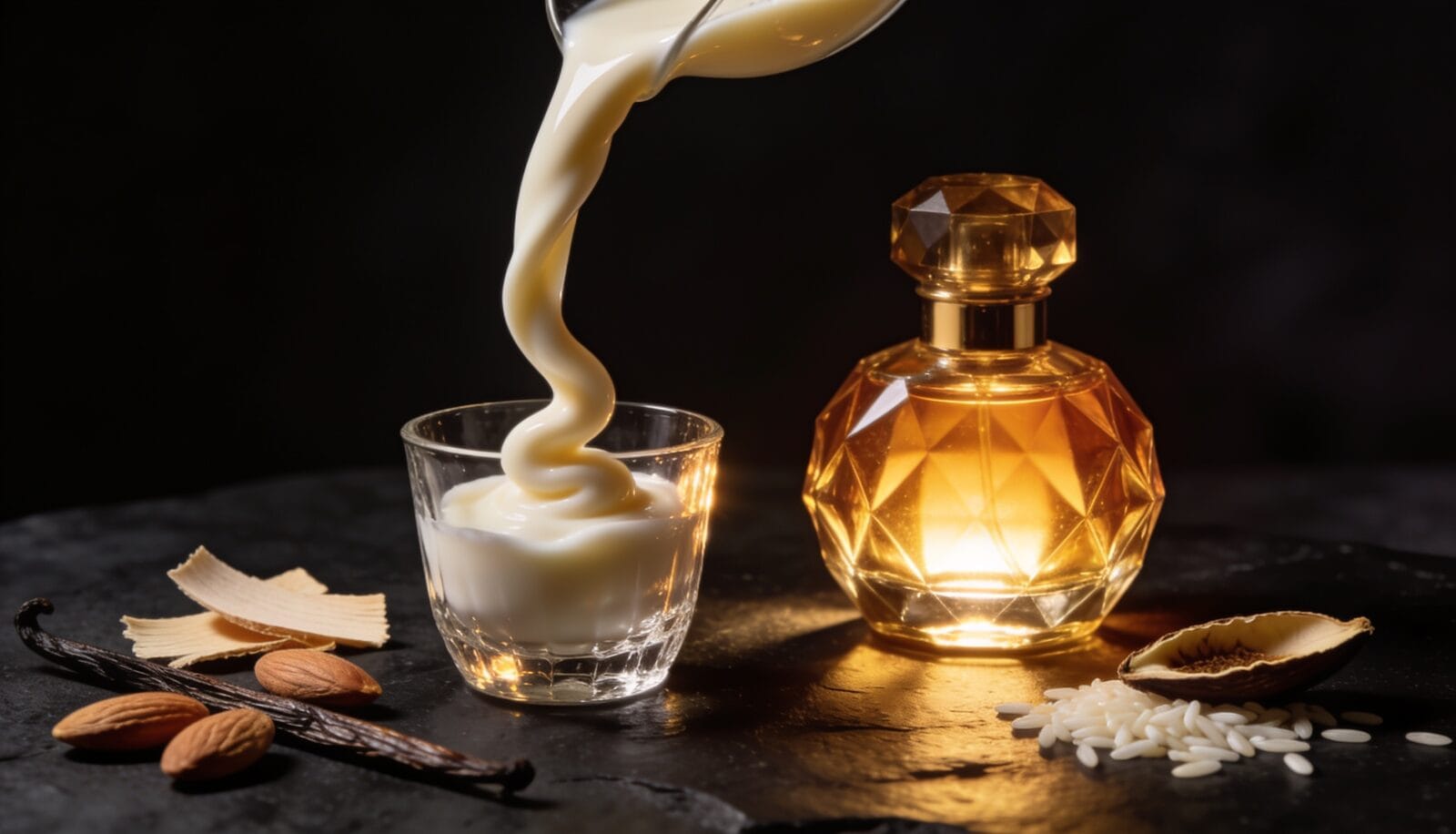
Around that creamy heart, a whole palette has organised itself: sandalwood, coconut, vanilla, tonka, rice, sweet almond, and a veil of clean white musk. Sandalwood does the heavy lifting. Its dense, milky molecular structure acts as an anchor, holding the lighter, more fugitive creamy notes in place so the softness lasts eight hours or more rather than evaporating in an afternoon. It is the difference between a scent that feels like a passing thought and one that feels like a second skin.
The deeper appeal, though, is emotional, and it explains why milk has arrived precisely now. After years of fragrances built to impress a crowd, the mood has turned inward, toward comfort and intimacy — the same instinct that gave us quiet luxury in fashion, the unlabelled cashmere that only the wearer knows the price of. Lactonic scents are maternal without being childish and gourmand without being sugary. They do not need to shout to be noticed; they simply need to be close. It is no accident that the milkiest launches — Nishane's iris-soft Meant to Be Seen among them — are also the ones stepping away from projection toward the whispered register of a skin scent.
None of this is as easy as it sounds. Cream is a treacherous thing to bottle. Push the lactones too hard and the effect turns waxy, soapy, or cheap — the olfactory equivalent of sunscreen and melting banana, a trap more than one prestige house has stumbled into this year. The masterpieces walk a razor's edge: enough richness to feel indulgent, enough restraint to feel refined, a roundness that reads as cashmere rather than confectionery. Done well, a lactonic perfume has the quiet confidence of a perfectly plain white shirt — nothing to prove, everything in place.
Perhaps that is the real reason the milk turn feels less like a fad than a homecoming. Milk is the first scent any of us ever knew, the smell of warmth and safety before we had words for either. To bottle it now, in a year hungry for softness, is to sell not a fragrance so much as a feeling — the desire not to dazzle, but to be held. In an industry that spent so long learning to shout, the boldest move left was to whisper. And the whisper, it turns out, smells like cream.
Before You Commit
Read about it. Then live with it.
Order a 2ml decant of any scent in the house and wear it for a few days before you commit.