/ 4 min read
Second Life: How Perfumery Learned to Bottle What It Once Threw Away
For most of its history, fine perfumery has been an art of the first pressing — the newest harvest, the most pristine petal, the purest distillation, everything downstream quietly swept away. A rose gives its oil and the spent blossoms go to the compost heap. An orange yields its blossom and tons of by-product go to the tip. Vetiver surrenders its fragrant roots and vast piles of woody biomass are simply burned. Luxury, for a long time, meant taking only the finest sliver of a thing and forgetting the rest.
That instinct is now being quietly rewritten. The most interesting idea in high-end scent this year is not another dazzling captive molecule but a change of conscience about waste — the discovery that what perfumery once discarded can be coaxed into something worth wearing. The industry calls it upcycling, and it is turning the leftovers of one process into the raw material of another. It is circularity dressed in silk.
The great composition houses have moved first, because they hold the science. Firmenich now offers a Circular Collection — a suite of ingredients created entirely from upcycled matter, materials that would otherwise have been thrown away. Givaudan has drawn a luxurious oil from spent coffee grounds and christened it in the language of prestige, with the beauty press already calling upcycled coffee the successor to argan. These are not gestures. They are new colours on the perfumer's palette, born from the refuse of other industries — citrus peels left by juice makers, pulp and wood chippings, exhausted petals that have already given one perfume and are asked, gently, to give a second.
What makes this more than an ethics story is that the salvaged materials often smell genuinely different — and better for being strange. A rose absolute drawn from petals that have already been distilled once carries a deeper, more shadowed sweetness than the first pass; a citrus molecule reclaimed from peel has a brightness with grain to it, not the flat sparkle of the synthetic. Constraint, as it so often does in art, has become a source of character. The very fact that these notes were never designed to be beautiful is what gives them their quiet, lived-in soul.
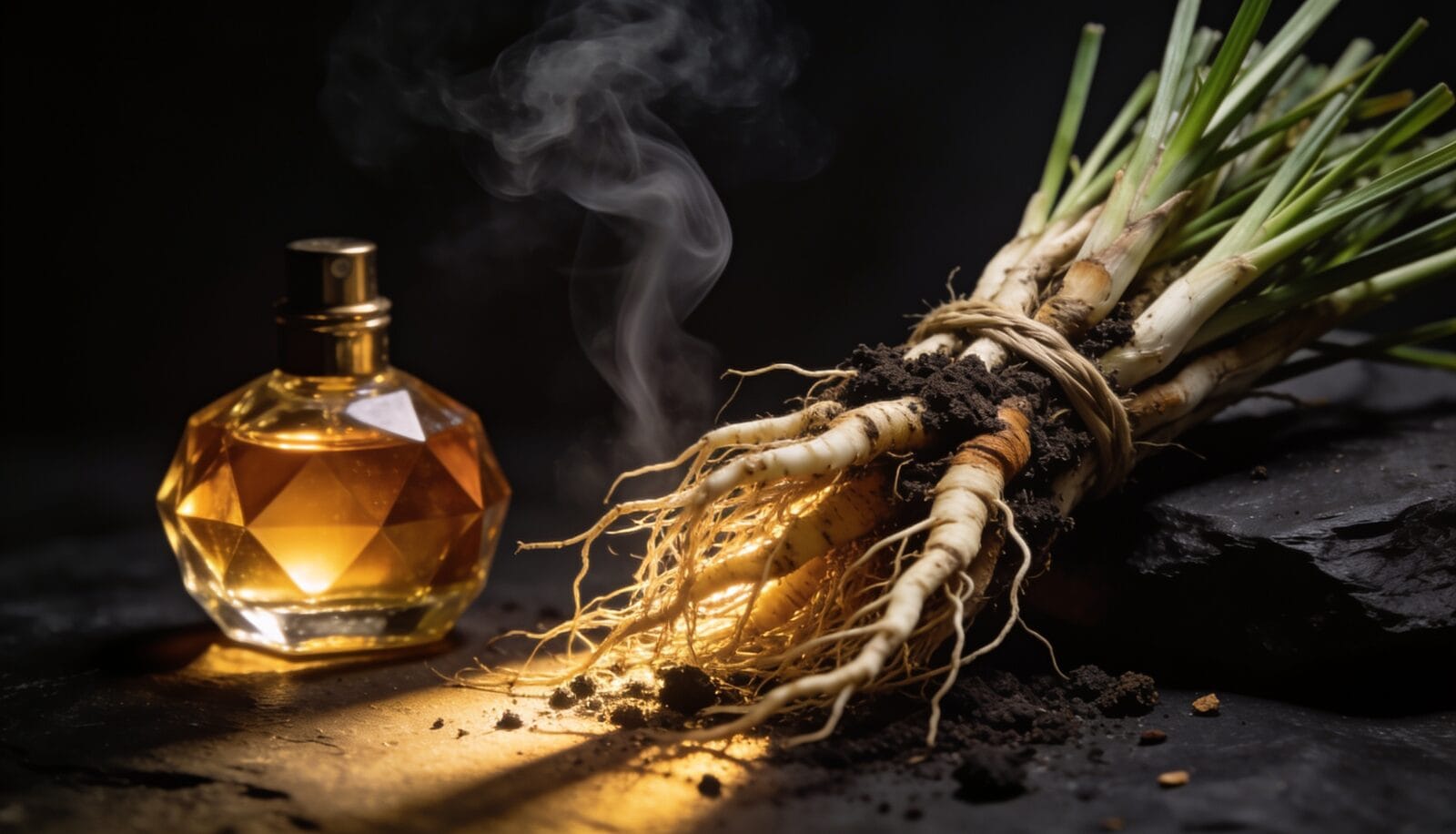
Nowhere is the shift clearer than in vetiver, that dark, rooty anchor beloved of niche houses. Haiti's southern hills around Les Cayes produce more than half the world's vetiver oil, and for generations the extraction has been extravagantly wasteful, discarding great volumes of biomass for every precious kilo of oil. Now that discarded matter is being reclaimed and re-distilled into a usable ingredient, so a single harvest yields more of its own perfume and less of its own ash. For a material already prized for holding a whole composition together, there is a fitting poetry in it learning to waste nothing of itself.
There is a human dimension too, and it is not decorative. When a house like Sana Jardin looked at the hundreds of tons of orange-blossom by-product being sent to Moroccan landfill each year, it saw not waste but a second income for the women who pick the flowers — a way to make the discarded part of the harvest pay a wage. Upcycling, at its best, does not merely tidy up a supply chain; it redistributes who benefits from it, turning the overlooked into the valuable at every link.
It helps that the audience is finally ready. The niche segment is expanding several times faster than the mass market, and the modern connoisseur increasingly buys the story as much as the scent — the provenance, the integrity of the ingredient, the sense that a bottle carries a worldview. A perfume built from what was rescued rather than merely harvested is a narrative that flatters both the wearer's taste and their conscience, without asking them to sacrifice an ounce of beauty. That is a rare and seductive combination.
None of this is a renunciation of luxury; it is a redefinition of it. The old opulence was the opulence of excess — of taking the best and leaving the rest. The new opulence is subtler and, in its way, more demanding: to see the whole of a thing, to waste nothing, to find the hidden gold in what was headed for the fire. To wear an upcycled scent is to carry a small argument on the skin — that nothing beautiful should be thrown away before it has given everything it has. In an age learning, slowly, to value what it once overlooked, perfume may turn out to be one of its most eloquent teachers.
Before You Commit
Read about it. Then live with it.
Order a 2ml decant of any scent in the house and wear it for a few days before you commit.