/ 4 min read
Saffron: Red Gold and the Note the World Rediscovered
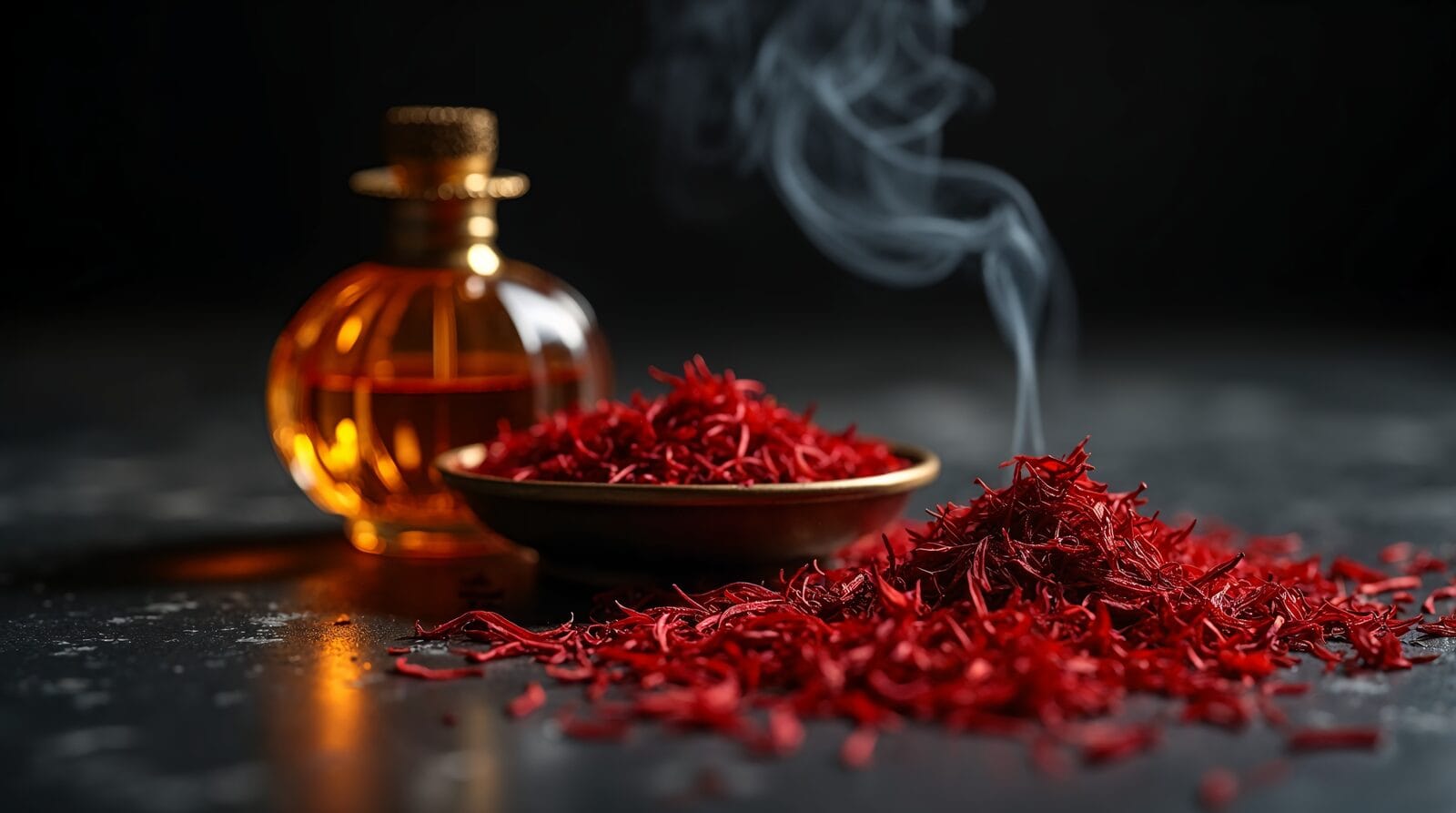
Before dawn, in a field that will bloom for barely two weeks of October, a flower opens the colour of dusk and is gone by midday. Inside it, three crimson threads. To gather a single kilogram of saffron you need roughly two hundred thousand of these flowers, six hundred thousand threads, every one pulled by hand before the heat of the day can dull it. There is no machine for this, and there never has been. This is why saffron is, by weight, the most expensive spice on earth — and why perfumers speak of it the way jewellers speak of an uncut stone.
The plant is Crocus sativus, sterile and entirely dependent on human hands to survive. Iran grows roughly nine in every ten threads the world uses; the rest come from Kashmir, from the high plains of Spain, from a few villages in Greece. At prices that now cross ten thousand euros a kilogram, natural saffron is impractical for almost any perfume sold at scale. And yet its scent is everywhere this year — which tells you something about how badly the industry wants it.
What does it actually smell like? Nothing else in the perfumer's palette, which is the honest answer. Saffron is warm and spicy, faintly metallic, a little medicinal at its edge, and — most strangely — leathery. It carries the scent of cured hide without a trace of animal in it. The molecule responsible is safranal, born as the threads dry, joined in the modern studio by Givaudan's safraleine, a material one writer described as smelling like "the space between a saffron thread and a cured hide." That is the paradox at saffron's heart: a flower that smells of leather, a spice that smells of smoke and skin.
Because the natural material is so precious — and so restricted by today's safety standards — almost every saffron you meet in a bottle is carried by safranal and safraleine rather than the threads themselves. Purists wince, but they shouldn't. This is not a cheat; it is a translation. The synthetics let a perfumer paint with saffron's leather-and-fire without grinding a fortune of stigmas into a single flacon, and the best of them are indistinguishable from the dream of the thing.
None of this is new to anyone who grew up around real perfume. Saffron has been a cornerstone of Arabian perfumery for centuries, woven through oud blends and attars long before a European house thought to bottle it alone. When the global trade reports now crown saffron the dominant note of 2026, what they are really announcing is that the wider world has, once again, arrived at something the Gulf has always known. The richness, the warmth that comforts without ever turning sweet, the way a few threads can make a composition feel ancient and lit from within — this is heritage, not discovery.
The proof was in Milan this June. At Esxence, the art-perfumery world's annual gathering, texture and contrast were the themes everyone kept returning to — salt against fruit, smoke against flower — and saffron sat at the centre of the most admired debut. Amouage expanded its Attars collection with Suede Ibri, a highly concentrated oil built on saffron, leather and violet. The accord is not loud; reviewers called it smooth, almost powdery, with a quiet smoky undertone — one of the most refined leather interpretations the house has released in years. It is saffron used not as a spike of spice but as a mood: a hush, a warmth, a presence you feel before you can name.
That is why saffron belongs to this moment. The current appetite in fragrance is for scents built around feeling rather than formula — compositions that comfort and envelop rather than announce. Saffron answers perfectly. It is rich without weight, sensual without insistence, luxurious in a way that needs no explanation because the cost is written into every hand-picked thread.
Wear it the way you would wear something genuinely rare: with restraint, and with attention. A saffron fragrance rewards the patient nose, unfolding from its bright metallic first breath into leather, into amber and warm wood, into something that smells less like a perfume and more like firelight remembered. Two weeks of October, two hundred thousand flowers, and the colour of dusk — all of it, in the end, distilled to a single thread laid warm against the skin.
Before You Commit
Read about it. Then live with it.
Order a 2ml decant of any scent in the house and wear it for a few days before you commit.