/ 3 min read
Time in a Bottle: The Slow Perfumery Movement
For years, the niche fragrance world ran on speed. New launches arrived in monthly waves, dupes shadowed every hit within weeks, and the loudest, sweetest, most screenshot-ready scents won the algorithm. But a quieter counter-current has been gathering through 2026, and it asks the most luxurious question of all: what if a perfume were allowed to take its time?
The movement has a name now — slow perfumery — and it stands deliberately apart from influencer-led hype. Rooted in craftsmanship, ethical sourcing and ingredient transparency, it favours depth over noise. Its devotees speak less about top-note fireworks and more about patience: barrel-aged oils, high-altitude extractions, and compositions designed to settle into the skin rather than shout from across a room. In an oversaturated market crowded with copycats, time has quietly become the one thing that cannot be faked.
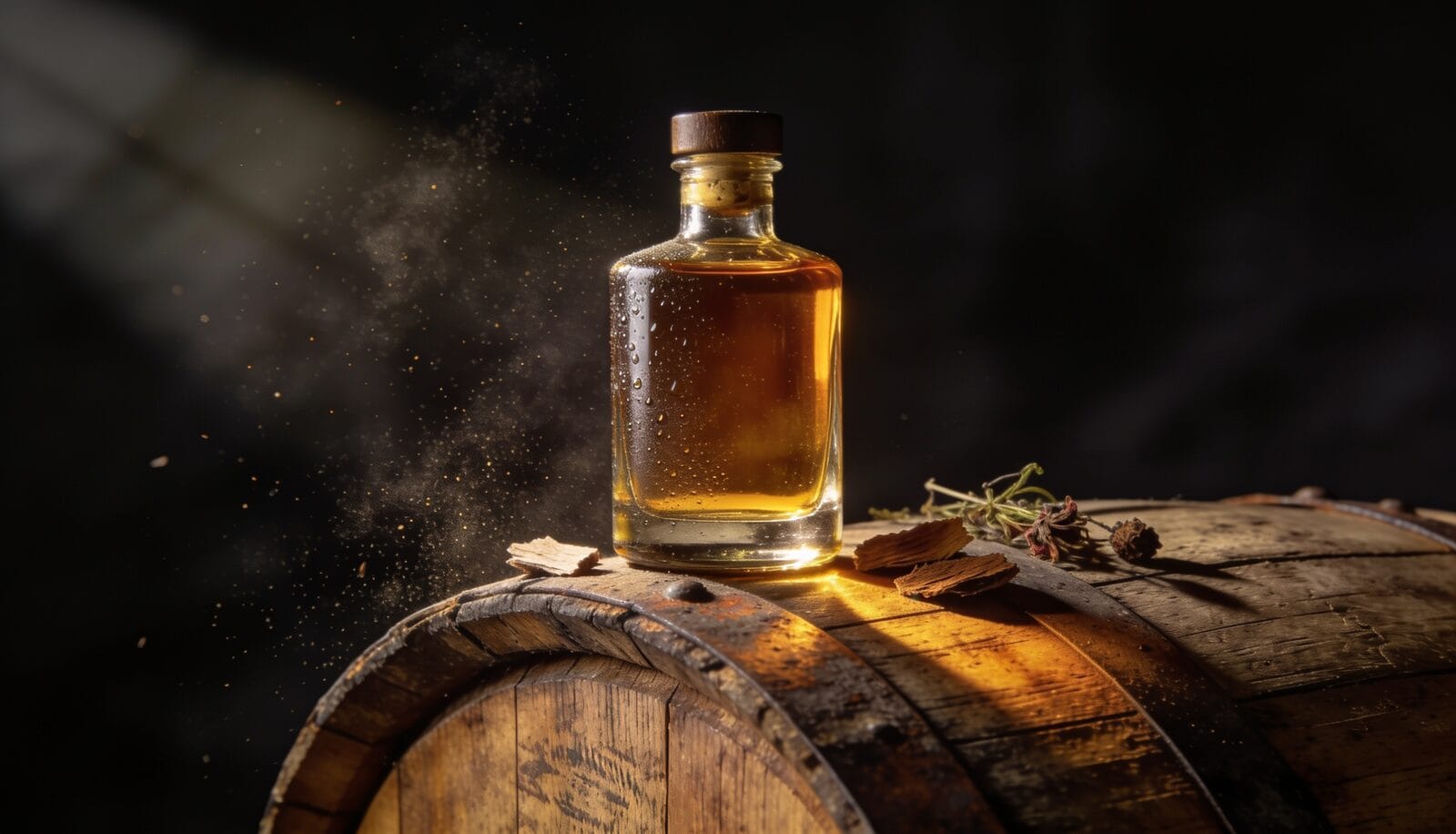
Nowhere is this clearer than in the strange, beautiful practice of barrel aging. Borrowed from the world of fine bourbon, it involves resting an eau de parfum or extrait inside used American white oak barrels — staves that have already held four to twelve years of whiskey. What happens next is pure chemistry made poetic. Vanillin leaches from the toasted wood, lending a soft sweetness no synthetic can quite mimic. Lactones add a creamy, almost coconut nuance. Tannins gentle the sharp edges of aldehydes, and slow micro-oxygenation rounds out the volatile top notes over months, the way air softens a great red wine. The perfume emerges not louder, but rounder — sanded smooth by time.
The house making the loudest case for patience is, fittingly, one of the quietest. Amouage's Essences collection — a trilogy the Omani house frames as an exploration of the "geometry of time" — treats maturation as the point, not the footnote. Its centrepiece, Sequence, composed by perfumer Julien Rasquinet, is built at an unusually rich thirty-percent concentration and put through a six-month aging process, including a double infusion with sandalwood chips and oak barrels. The composition itself reads like a journey through hours: bright raspberry, lychee and saffron at the opening; tonka, rose and osmanthus at the heart; and a slow descent into leather, oud and amberwood. Reviews diverge on whether it sings or merely whispers, but the ambition is unmistakable — this is fragrance that measures itself in months, not minutes.
The economics are quietly persuasive too. The niche segment is growing at around nine percent a year — more than three times the pace of mass-market scent — with the luxury niche fragrance market projected to reach nearly five billion dollars in 2026. As the trade press has noted, for makers who can no longer out-shout the dupes, time is on their side. You cannot screenshot a six-month infusion. You cannot reverse-engineer the slow handshake between oil and oak. Maturation is a moat that money alone cannot leap.
There is something almost moral in all of this, a rebuke to the disposable churn of modern scent. To age a perfume is to bet on permanence in an industry addicted to novelty. It asks the wearer, too, to slow down — to notice how a fragrance changes across an evening, to prize the drydown that only reveals itself after hours. The reward is intimacy. These are not scents that introduce themselves at the door; they are the ones you discover on your own wrist, late, when the room has gone quiet.
If the last decade of niche belonged to the spectacular, this new chapter belongs to the patient. The barrel, the cellar, the long unhurried rest — these are the new markers of value, the proof that something worth wearing took real time to become itself. In a world that rewards the instant, the most radical luxury may simply be the willingness to wait.
Before You Commit
Read about it. Then live with it.
Order a 2ml decant of any scent in the house and wear it for a few days before you commit.