/ 3 min read
Osmanthus: Apricot, Suede, and the Forest That Bears Its Name
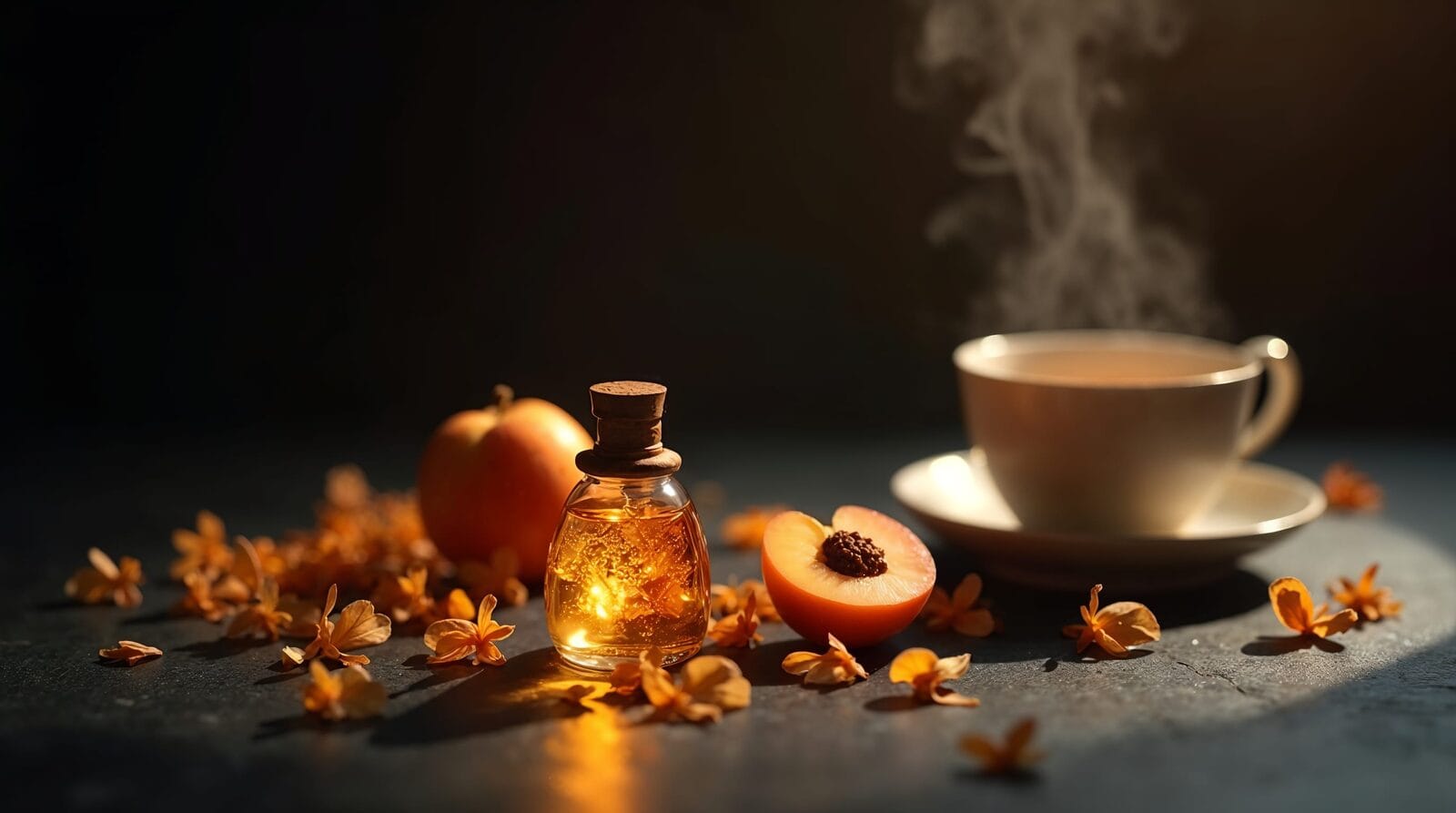
There are flowers you smell before you ever see them. Walk through a southern Chinese city in early autumn and the air arrives first — a warm, fruited sweetness that seems to come from nowhere, until you notice the tiny clusters of apricot-gold blossoms studding an unremarkable evergreen shrub. This is Osmanthus fragrans, called gui hua in Mandarin, and for all its modesty it is one of the most coveted raw materials a perfumer can reach for.
Botanically, osmanthus keeps grand company. It belongs to the Oleaceae — the olive family — which makes it a cousin of jasmine and lilac, two of perfumery's most storied florals. Yet osmanthus smells like neither. Where jasmine is heady and indolic and lilac is dewy and green, osmanthus speaks in a stranger, more contradictory language: ripe apricot and dried peach up front, a suede-soft leather curling underneath, and threaded through it all a luminous, tea-like transparency. It is a floral that smells of fruit and skin at once, and that improbable tension is exactly what connoisseurs prize.
Part of the allure is sheer scarcity. China holds a near-monopoly on osmanthus concrete and absolute, and the harvest window is cruelly brief — a few hours after dawn, across a few weeks each autumn, when the blossoms are at their most fragrant. The city of Guilin, whose name literally means forest of osmanthus, gathers something on the order of ten thousand metric tonnes of flowers a year, and yet the entire world produces only around a single tonne of concrete annually. It takes roughly three tonnes of those weightless blossoms to yield a single kilogram of absolute. Little of it is exported. When a niche house lists real osmanthus on its formula, it is making a quiet declaration of intent.
The flower's roots in Chinese life run deeper than perfume. Osmanthus has scented tea and rice wine for centuries; its blossoms are folded into mooncakes and confections at the Mid-Autumn Festival, when the plant is at its peak and the moon is said to harbour a celestial osmanthus tree. Archaeologists have even recovered evidence of the flower at the Neolithic Zengpiyan cave site near Guilin, a reminder that this fragrance has been woven into human ritual for thousands of years. To wear osmanthus, in a sense, is to wear an entire culture's idea of autumn.
The West has been slow to catch on, but 2026 may be the year that changes. This season Essential Parfums released Osmanthus Absolu, a deliberately material-forward composition that puts the raw absolute centre stage and lets its fresh, fruity and faintly leathery facets speak for themselves — exactly the kind of restraint a true ingredient deserves. It joins a small but growing canon: think of the brisk apricot-and-leather of the classic Hermès take, or the way contemporary perfumers now use osmanthus to lend warmth and a fruited glow without resorting to the heavy gourmands crowding so many launches.
That, finally, is the case for osmanthus in a serious collection. We live in an olfactory moment loud with vanilla, caramel and dessert-shop sweetness. Osmanthus offers an alternative kind of pleasure — fruited but never sugary, soft but never sleepy, sensual in the way of warm skin rather than warm cake. It flatters quietly. It rewards the wearer more than the room. And it carries, in every golden molecule, the memory of a flower so prized that an entire forest, an entire city, was named in its honour.
Smell it once at the right concentration and you understand why China keeps it close. Some luxuries announce themselves. Osmanthus simply waits, apricot-gold and unhurried, for you to lean in.
Before You Commit
Read about it. Then live with it.
Order a 2ml decant of any scent in the house and wear it for a few days before you commit.