/ 3 min read
One Tree, Three Perfumes: The Quiet Genius of the Bitter Orange
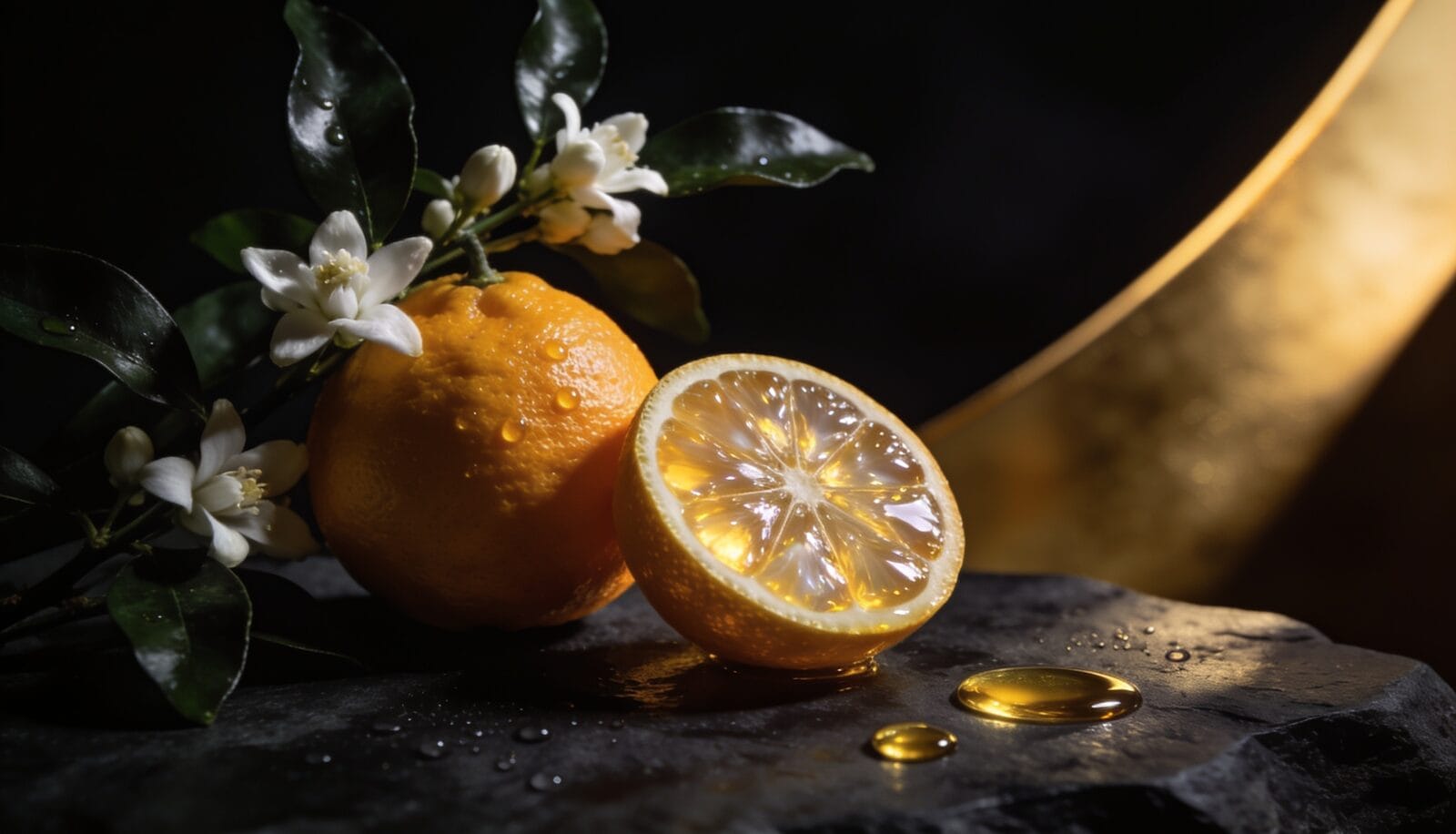
In a sunlit Sicilian courtyard, the bitter orange tree looks like nothing special: modest, dark-leaved, hung with fruit too sharp to eat. Yet Citrus aurantium is the most generous plant in all of perfumery. From this single tree a perfumer draws three distinct materials — flower, leaf and peel — each with its own colour, its own temperature, its own mood. To understand it is to hold, in one hand, the entire architecture of citrus.
Begin with the blossom. Neroli is steam-distilled from the tree's freshly picked white flowers, and it takes close to a tonne of hand-gathered petals to yield a single kilogram of oil — which is why it has always carried the price of a jewel. The name honours Anne-Marie de La Trémoille, the seventeenth-century princess of Nerola, who wore the scent on her gloves and made a whole court fall in love with it. Neroli is luminous and honeyed, with a cool, faintly metallic gleam beneath the sweetness — the sound of white light, if light had a smell.
Then come the leaves and twigs. Distilled together, they give petitgrain, whose name — the "little grains" — recalls the tiny unripe fruit once used for the same oil. If neroli is the tree in full bloom, petitgrain is its shadow: green, woody, bittersweet, with a bracing herbal snap. It is the everyday counterpoint to the flower's extravagance, the material that gives a citrus accord its backbone and its faint melancholy. Perfumers reach for it when they want brightness that has been thinking.
Last is the fruit itself — or rather its skin. Cold-pressed from the peel, bitter orange oil is drier and more astringent than the cheerful sweet orange we know from breakfast; it is all shadow and cut, more quinine than sugar. In the classical eau de cologne, this bitter zest was the thread that stitched neroli and petitgrain together, a family reunited in a single splash. Three materials, one tree, one long Mediterranean afternoon.
For most of modern perfumery, citrus was treated as a flourish — the sparkling top note that dazzled for ten minutes and then vanished before the taxi arrived. In 2026 the houses have quietly inverted that logic. Citrus is being rebuilt as heart and spine rather than opening applause: bitter instead of candied, grounded in moss, musk and resin so that it lingers for hours. Neroli colognes are returning to the counters, and petitgrain and bitter orange now read as grown-up, mineral, self-possessed — the difference between candy lemon and sun-warmed peel held between the fingers.
No release makes the case more plainly than Tom Ford's Taormina Orange, added to the Private Blend collection in the spring of 2026. It opens on green mandarin and lime sharpened by cool cardamom, then settles into a heart of orange blossom absolute, Sicilian blood orange and bitter orange, before coming to rest on patchouli and oakmoss absolute. Read the notes slowly and you realise what Tom Ford has done: he has bottled the whole bitter orange tree at once — blossom, fruit and the earthy floor it grows from. It is, in a sense, the grander, rounder sequel to his own Neroli Portofino, less a postcard of the coast than the tree that gave the coast its perfume.
That completeness is the lesson. The bitter orange refuses to be merely sweet; its beauty lives in the bitterness, in the tension between blossom and bark, in the cool astringency that keeps the sweetness honest. To wear it well is to carry a whole tree on the skin — flower, leaf and fruit at once — and with it the long, golden hours of the afternoon in which it grew. In a season crowded with novelty, the most quietly radical thing a perfumer can do is return to a plant that has been giving three gifts all along, and finally accept all three.
Before You Commit
Read about it. Then live with it.
Order a 2ml decant of any scent in the house and wear it for a few days before you commit.