/ 4 min read
Blue Gold: Lavender Steps Beyond the Barbershop
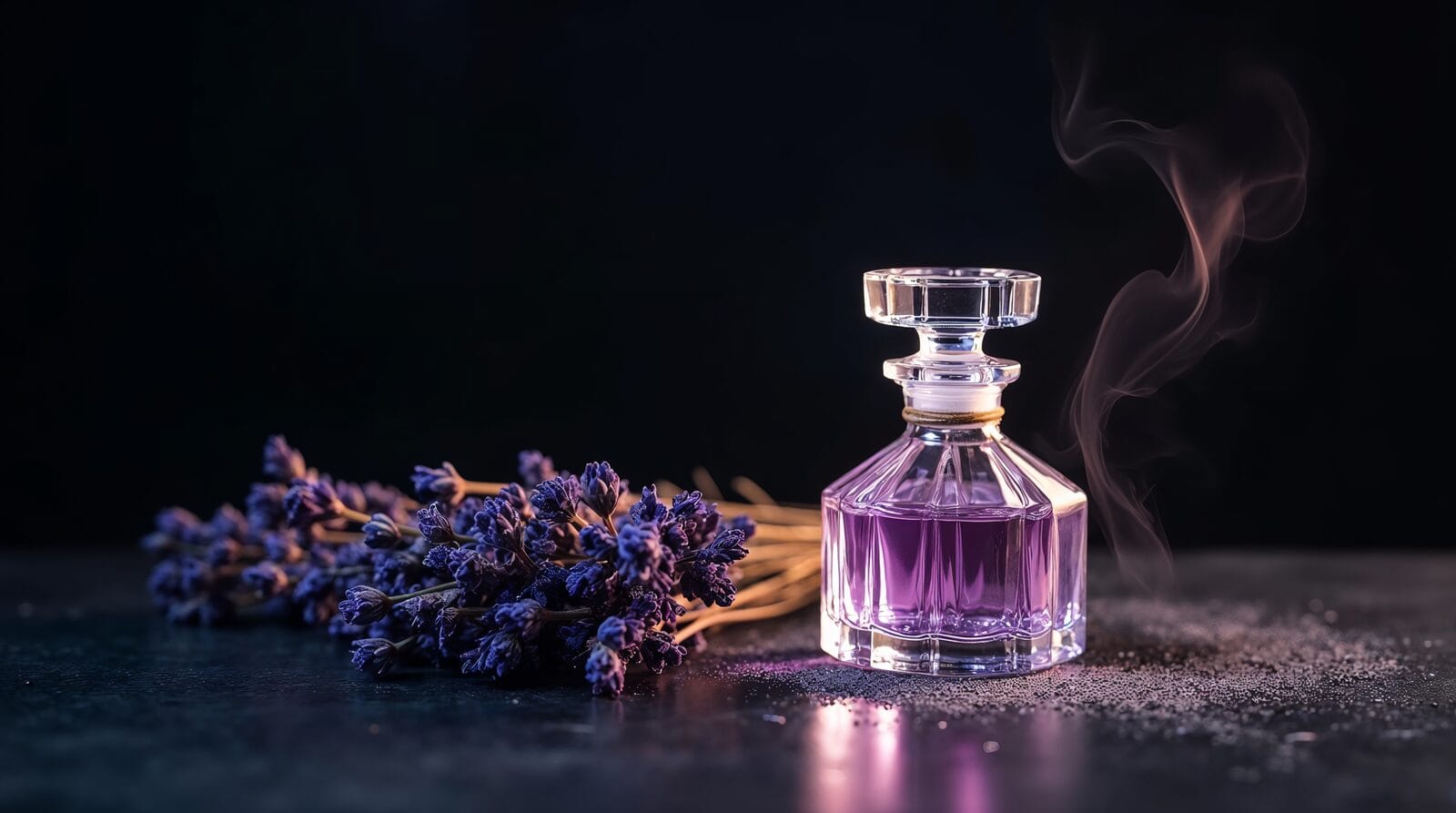
For most of the last century, lavender has been a note in disguise. We know its smell intimately — clean, herbal, faintly sweet — but we have mostly met it where it hides: inside the men's cologne, the shaving soap, the freshly pressed shirt. Somewhere along the way, the most romantic flower in Provence became a synonym for the barbershop. At Esxence 2026, the niche world quietly decided it had had enough of that, and handed lavender back its strangeness.
To understand the homecoming, you have to understand the exile. In 1882 the house of Houbigant released Fougère Royale, and with it a chord that would echo for nearly a century and a half: lavender lifted high, coumarin's warm hay-and-almond glow beneath it, oakmoss anchoring the base. Seven years later Guerlain answered with Jicky — still the oldest perfume in continuous production — and the template was set. Lavender became the bright, aromatic overture of the fougère, the family that would go on to define masculine perfumery. It was a triumph that hardened into a trap. The more lavender signified "clean man," the less anyone allowed it to be anything else.
What was on display in Milan this spring was a deliberate act of unlearning. The standout was Le 12 Victor Hugo by Jacques Fath, composed by Jean-Christophe Hérault, who did something almost heretical: he stripped lavender of its modern fougère scaffolding. No vetiver, no patchouli, no moss to make it respectable. Instead he reached past the cliché to the genre's own roots, leaning on coumarin to wrap the herb in a powdery, almost edible softness. The result reads less like aftershave and more like a memory — lavender as a feeling rather than a function.
He was not alone. Across the fair, perfumers were treating lavender as raw material again rather than received idea. Some pushed it toward the smoke and leather of birch tar, letting the herb's camphored edge strike sparks against something dark and resinous. Others let it bloom soft and powdery, closer to violet and iris than to cologne. The through-line was a refusal of the default: lavender was no longer there to signal freshness on command. It was there to be looked at.
There is a reason the timing feels right. Lavender is one of the few great perfumery materials that remains, genuinely, agricultural — grown in long violet rows across the high plateaus of Provence, cut in July, distilled within hours of harvest. It carries terroir the way wine does; a fine Provençal lavender and a brisk high-altitude lavandin smell like two different convictions. In an era when so much radiance is conjured from a single clever molecule, there is something grounding about a note you can trace back to a field and a season. Lavender's "blue gold" is not a marketing line. It is a crop.
What makes the niche reading of lavender so compelling is its emotional range. Strip away the soap association and the material turns out to be surprisingly melancholic — there is a coolness in it, a greyness, a sense of dusk. It can be calming without being dull, herbal without being medicinal, masculine and feminine in the same breath because it predates our insistence that a scent must choose. The best of the new lavenders lean straight into that ambiguity. They are not trying to smell expensive. They are trying to smell like something true.
This is, in miniature, the story of niche perfumery in 2026: the drift from fragrance as classification to fragrance as experience, from notes that perform to notes that confess. Lavender is the perfect test case because it had been so thoroughly defined that we forgot it could surprise us. To smell it now — unmoored from the fougère, unembarrassed by its own sweetness — is to be reminded that even the most familiar materials still hold rooms we have never entered.
If you have spent years assuming lavender is not for you, this is the season to test the assumption. Seek out one of the new compositions that treats it as a soloist rather than a supporting note. Give it the half-hour it needs to travel from that first bright, green inhale into the soft, hay-warm hush beneath. You may find, as Milan did this spring, that the most overfamiliar note in all of perfumery had simply been waiting to be heard again.
Before You Commit
Read about it. Then live with it.
Order a 2ml decant of any scent in the house and wear it for a few days before you commit.