/ 3 min read
Fig: The Whole Tree in a Bottle
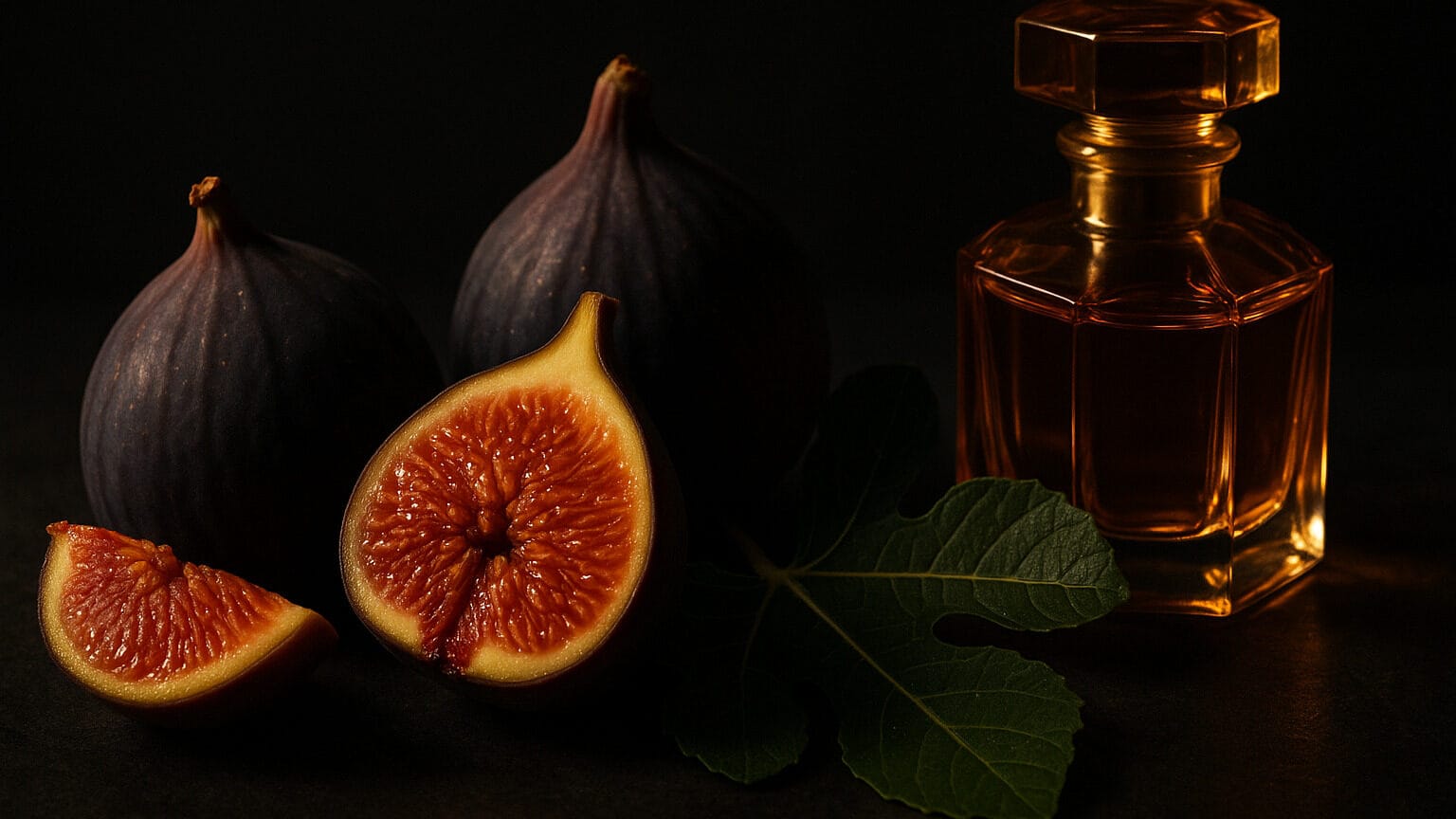
There is no such thing, strictly speaking, as a fig note. Ask a perfumer to bottle a rose and they can reach for an oil pressed from ten thousand petals; ask them for a fig and they must instead build a small world. The fig is not a single smell but an entire tree captured at once — the sweet blush of ripe fruit, the green bitterness of a crushed leaf, the faint animal milk that beads at a broken stem, and beneath it all the warm, resinous breath of sun-baked bark. To wear fig well is to wear a whole afternoon in an orchard.
This is precisely why the note has quietly become one of the defining moods of summer 2026 — a season the trade press keeps describing in the language of warm skin, green shade, and slow, unhurried days. In a market exhausted by loud gourmands and synthetic sweetness, fig offers something older and gentler: a fragrance that feels lived-in rather than performed, closer to a memory than a statement. It is luxury with the volume turned down.
The story of fig in modern perfumery begins with a single, quietly radical bottle. In 1994, the perfumer Olivia Giacobetti composed Premier Figuier for L'Artisan Parfumeur — the first fragrance to give the fig a leading role rather than a supporting one. Where others had used it as a passing fruit, Giacobetti built the entire composition around the tree: the milky sap, the green leaf, a whisper of creamy sandalwood beneath. It was tender, translucent, almost weightless, and it opened a door that has never closed. A few years later Diptyque's Philosykos — its name Greek for a lover of figs — followed the same instinct all the way to the roots, rendering not just the fruit but the bark and the earth around it. Both remain cult classics precisely because they smell like a place, not a product.
What makes the illusion possible is a small handful of remarkable molecules. Stemone lends that unmistakable green, faintly minty freshness of a leaf snapped from the branch. Gamma-octalactone supplies the other half of the magic: the earthy, sticky green of the fig leaf and the milky, lactonic haze of the young fruit's sap. Together they conjure something no natural extract could — because, tellingly, there is no true essential oil of fig fruit. The whole beloved accord is an act of reconstruction, a perfumer's memory of a tree translated into chemistry. That it can feel so effortlessly natural is one of the quiet triumphs of the craft.
The pleasure of fig lies in its refusal to resolve into any one thing. It is sweet but never sugary, green but never sharp, creamy but never heavy. It hovers in the fertile territory between fruit and vegetable, between the edible and the botanical, and that ambiguity is exactly what gives it such sophistication. A good fig fragrance can read as fresh in the morning and skin-warm by evening; it flatters rather than announces, drawing people closer rather than filling a room. In an age increasingly fluent in the grammar of quiet luxury, that restraint reads as the highest kind of confidence.
There is also something deeply seasonal, almost pastoral, in fig's appeal — a Mediterranean daydream folded into a bottle. It carries the memory of a tree heavy with fruit in August heat, of leaves that release their scent when brushed, of a fruit split open to reveal its honeyed crimson heart. To reach for fig now is to reach for slowness itself: for the long light of late summer, for the luxury of doing nothing in particular, beautifully. It is the rare note that smells less like a fragrance and more like a feeling — and that, in the end, is why the whole tree keeps finding its way into the bottle.
Before You Commit
Read about it. Then live with it.
Order a 2ml decant of any scent in the house and wear it for a few days before you commit.